
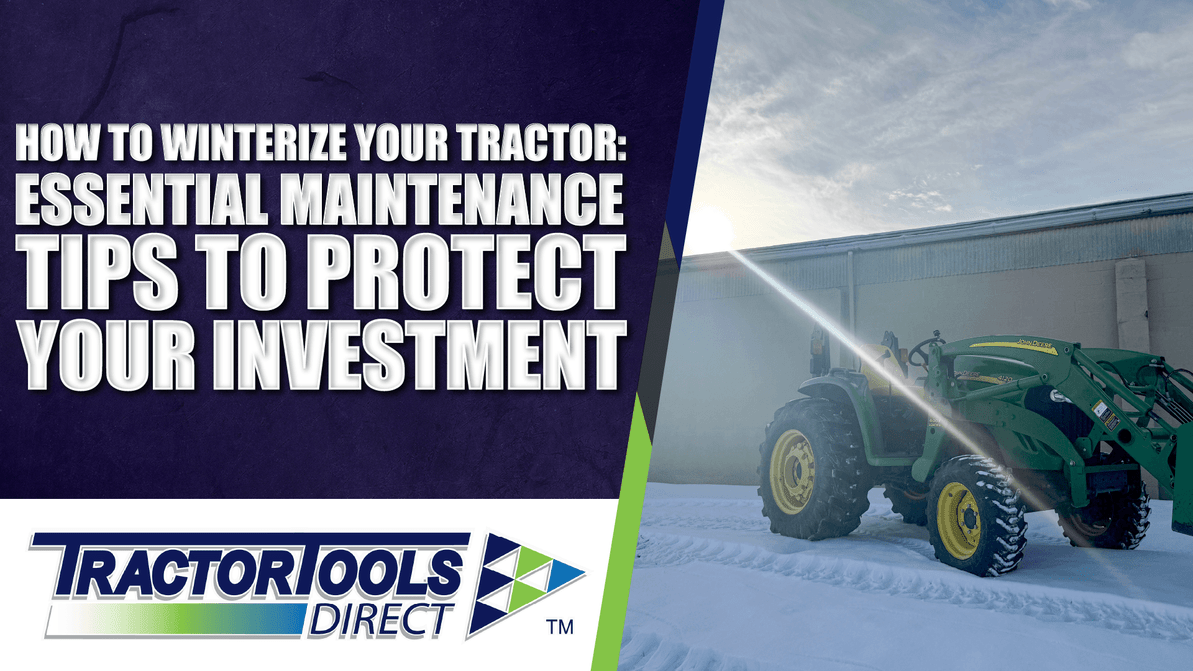
How to Winterize Your Tractor: Essential Maintenance Tips to Protect Your Investment
Farm equipment is one of the most valuable investments a farmer can make. At Tractor Tools Direct, we’re committed to helping you protect that investment season after season. One of the best ways to ensure your tractor’s longevity is through preventive maintenance—especially before winter. Properly winterizing your tractor helps prevent costly repairs, improves performance, and extends the life of your equipment so it’s ready for the next growing season—and the next generation.
Below, we’ll walk you through practical steps for winter tractor maintenance to keep your machine in top shape all year long.
1. Start with Your Owner's Manual and Maintenance Log
Before doing anything, consult your tractor’s owner’s manual for the manufacturer’s recommended winter maintenance schedule. Every make and model is different, so following these specific guidelines ensures the best care for your equipment.
It’s also smart to keep a maintenance logbook. Documenting each service or repair helps you track performance trends and anticipate future needs. A detailed record can also make mechanic visits faster and more efficient since they’ll know exactly what’s already been done.
2. Inspect and Clean Your Tractor
Give your tractor a thorough cleaning before storage. While washing away dirt and debris, take note of any cracks, leaks, corrosion, or discoloration that might indicate a problem. A careful inspection now can save you from major issues later.
3. Check Hoses, Radiator, Caps, and Fittings
Inspect hoses and gaskets for cracks or dry rot and replace them as needed. Worn rubber can allow condensation to enter the system over the winter.
Examine radiator caps, reservoir caps, and filters, replacing or cleaning them as recommended. This is also a perfect time to grease all fittings and hinge points using the type of grease specified in your manual.
4. Check and Replace Fluids
Proper fluid maintenance is crucial when winterizing a tractor. Inspect all systems—engine oil, hydraulic, transmission, and coolant—for signs of foaming or condensation. If water contamination is present, drain and replace the fluids.
Fluids naturally separate over time, and when water settles, it can cause rust and internal damage. Fresh, clean fluid ensures that your tractor’s systems are protected through cold weather.
5. Fill and Treat the Fuel Tank
Condensation in an empty tank can cause serious problems. Before winter, fill the fuel tank completely and add the appropriate fuel stabilizer or anti-gelling additive. For diesel tractors, consider using an anti-algae or antifungal additive to prevent microbial growth during storage.
6. Check and Replace Antifreeze
Your tractor’s antifreeze must be adequate for your local winter temperatures. Most modern tractors already use antifreeze, but if you have an older model that runs on water, make sure to drain the system to prevent freezing and damage.
7. Inspect and Protect the Tires
Cold weather can be tough on tires. Check air pressure or ballast material and confirm that any ballast contains antifreeze and a rust inhibitor.
If your tractor will be parked for months, place wood planks or concrete blocks under the tires to keep them off the frozen ground. This simple step can significantly extend tire life and prevent flat spots.
8. Condition Non-Painted and Rubber Surfaces
Use rubber conditioner on hoses and tires and apply protective coatings to seats, steering wheels, and other exposed surfaces to prevent cracking. You can also apply a rust inhibitor or lubricant (like Fluid Film) to metal areas for added protection.
Be cautious when using sprays or conditioners near high-heat components to avoid potential fire hazards.
9. Store Your Tractor Properly
Whenever possible, store your tractor indoors or under a roofed structure. If that’s not an option, cover it with a high-quality tarp to shield it from snow, ice, and sun exposure.
Before storage, trickle charge your battery, then disconnect and store it indoors to extend its life. If your seat or other removable parts can be taken off easily, keep them inside as well.
Don’t forget to cover the exhaust pipe, especially if it’s vertical, to prevent water or snow from getting in. Moisture in the exhaust system can cause rust, corrosion, or even damage to internal components like valves and turbochargers.
10. Prepare for Winter Use
If you plan to use your tractor during winter, keep starting fluid and de-icer on hand for cold starts and frozen components. Block heaters or heated blankets can help maintain engine temperature in extreme cold, making starts easier and reducing wear.
Final Thoughts
Your tractor is more than a machine—it’s a long-term investment in your farm’s productivity. A few hours of preventive winter maintenance now can save you from costly repairs and downtime later.
By following these tractor winterization tips from Tractor Tools Direct, you’ll keep your equipment reliable, efficient, and ready for the next growing season. Have questions? Give us a call at 260-225-3429, and one of our team members will be happy to assist!
Recent Posts
-

Do You Really Need a Bale Wrapper for Mini Round Bales?
As mini round balers grow in popularity among small acreage owners and livestock producers, ques …Apr 1st 2026 -

Small-Farm Balers: Mini Round Twine vs. Mini Round Net vs. Compact Square
Which Baler is Right for Your Compact Tractor and Small-Farm Operation? Small farms and owners …Mar 18th 2026 -

How to Choose the Right Kubota BX Tractor for Your Small Farm or Property
Kubota BX tractors are among the most popular sub-compact tractors on the market—and for good re …Feb 23rd 2026